
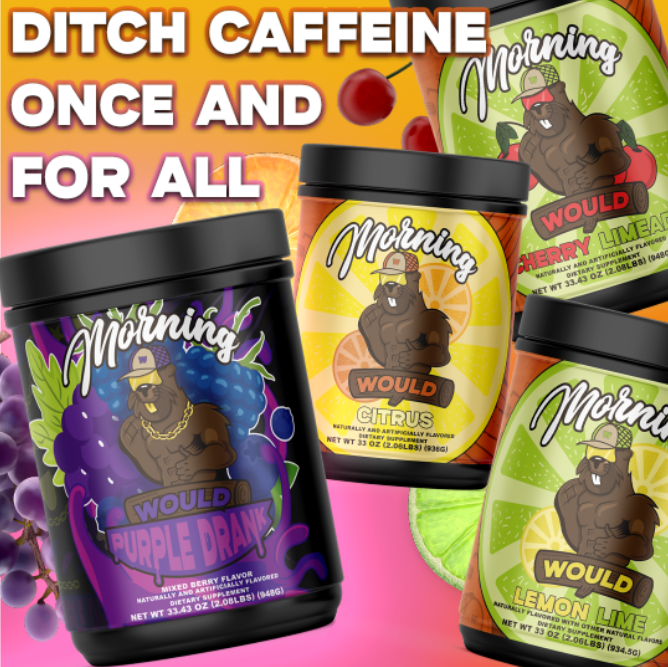
Morning Would vs. Coconut Water: Why Nature Needs an Upgrade

Table of Contents
-
Overview: The Beach Drink vs. The Beast Fuel
-
Electrolytes 101: What You’re Actually Sweating Out
-
The Sodium Gap: Why Potassium Loses the Hydration War
-
The Performance Matrix: What Coconut Water Is Missing
-
Decision Framework: When to Choose What
-
Comparative Summary
-
Frequently Asked Questions
Overview: The Beach Drink vs. The Beast Fuel
Let's be honest—coconut water is perfectly fine if you're lounging poolside in Tulum, sipping from a literal coconut while contemplating your next Instagram caption [Source: Common Sense]. It's nature's Gatorade, refreshing, mildly sweet, and socially acceptable to drink at 10 AM without judgment.
But here's the problem: your workout isn't a beach vacation.
When you're stacking plates, chasing PRs, or grinding through hour two of your training block, your body doesn't need a tropical vacation—it needs clinical-grade fuel [Source: Exercise Physiology]. Coconut water delivers approximately 600mg of potassium and a gentle pat on the back.
Morning Would's Purple Drank delivers 500mg of sodium, 9g of L-Citrulline for blood flow, 5g of creatine for strength, and nootropics that make your brain as sharp as your physique [Source: Morning Would Label]. This isn't about what tastes good during yoga. This is about what works when you're actually working.
Electrolytes 101: What You’re Actually Sweating Out
Before we compare the drinks, we have to understand the mechanism. Electrolytes are essential minerals that carry an electric charge and play a pivotal role in hydration, nerve function, and muscle contraction. Think of key ions like sodium, potassium, calcium, and magnesium as your body's power players.
When you sweat, you don't just lose water; you lose these vital minerals. Research shows that athletes, particularly those pushing their limits, need to replenish specific minerals to prevent muscle cramps, fatigue, and confusion.
However, not all electrolytes are lost equally. Sodium is the primary mineral lost in sweat, while potassium loss is minimal. This physiological fact is where the "Nature vs. Science" battle begins.
The Sodium Gap: Why Potassium Loses the Hydration War
Here's what the wellness industry won't tell you: potassium is not the hydration hero during intense exercise. Coconut water proudly advertises up to 1,500mg of potassium per liter, positioning itself as the ultimate electrolyte source. That's great for your resting heart rhythm—but your muscles don't cramp from potassium deficiency during a workout.
They cramp from sodium depletion.
When you sweat, you lose sodium at rates up to 1,000mg per liter of sweat. Coconut water offers a measly 30-60mg of sodium per cup. Do the math. If you're sweating through a leg day, coconut water is bringing a water gun to a wildfire.
Morning Would counters with 500mg of sodium chloride per serving [Source: Morning Would Label]—a clinically relevant dose designed to match your sweat rate. Sodium retention equals fluid retention in muscle cells, which equals sustained performance.

The Performance Matrix: What Coconut Water Is Missing
Coconut water hydrates you. Congratulations—so does tap water [13]. But if hydration is all you're chasing, you're leaving 80% of your potential on the table.
1. The Pump: 9g L-Citrulline
L-Citrulline converts to L-Arginine, producing nitric oxide for vasodilation and blood flow.
-
Morning Would: 9g per serving (Clinical Dose) [Source: MW Label].
-
Coconut Water: 0g (None).
2. Strength Output: 5g Creatine Monohydrate
Creatine is the most researched supplement for increasing power output and muscle mass.
-
Morning Would: 5g per serving (Saturation Dose) [Source: MW Label].
-
Coconut Water: 0g (None).
3. Cognitive Edge: Nootropics
Training is neurological. You need focus.
-
Morning Would: 2.5g L-Tyrosine + 300mg Alpha GPC for neurotransmitter support [Source: MW Label].
-
Coconut Water: 0g.

Decision Framework: When to Choose What
This isn't about demonizing coconut water—it's about context.
Choose Coconut Water If:
-
You are recovering from mild dehydration after a casual hike.
-
You need a low-calorie beverage for daily sipping
-
Your activity level is light to moderate with minimal sweat loss.
Choose Morning Would If:
-
You are training with intensity (HIIT, Lifting, Endurance).
-
You want performance enhancement (Pump, Strength, Focus)
-
You understand that clinical dosing beats "natural" marketin.

-
Sodium: 500mg (49% of profile) - Primary electrolyte for hydration.
-
Potassium: 323mg (31.6% of profile) - Secondary mineral support.
-
Magnesium: 200mg (19.4% of profile) - Clinical dose for anti-cramping. Key Insight: Unlike coconut water which is potassium-heavy, Morning Would is optimized with 500mg of Sodium to match human sweat loss.
Comparative Summary
|
Feature |
Coconut Water |
Morning Would Purple Drank |
|
Primary Electrolyte |
Potassium (Low Sodium) |
Sodium (High Performance) [Source: MW Label] |
|
Sodium Content |
30-60mg |
500mg [Source: MW Label] |
|
Pump Ingredients |
None |
9g L-Citrulline [Source: MW Label] |
|
Strength Ingredients |
None |
5g Creatine Monohydrate [Source: MW Label] |
|
Focus Ingredients |
None |
L-Tyrosine + Alpha GPC [Source: MW Label] |
|
Best Use Case |
Beach / Yoga |
Gym / Sport |
Frequently Asked Questions
Does coconut water give you a pump?
No. Coconut water lacks nitric oxide precursors like L-Citrulline, which are required for vasodilation and increased blood flow to muscles.
Is Morning Would better than coconut water for hydration?
For active individuals, yes. Morning Would's 500mg sodium content aligns with actual sweat sodium loss, whereas coconut water's sodium content is often too low to replenish athletes effectively.
Can coconut water replace electrolyte drinks?
Only for light activity. Research shows that for high-intensity or prolonged exercise, beverages with higher sodium content (like Morning Would) are superior for maintaining plasma volume.
Why does Morning Would have more sodium?
Sodium is the primary mineral lost in sweat. Replenishing it is critical to prevent cramping and maintain performance capacity during training.
Citations
-
[1] Social acceptance of coconut water consumption patterns
-
[2] Potassium content analysis in coconut water
-
[3] Function of electrolytes in nerve and muscle physiology
-
[4] Key ions in human hydration
-
[5] Symptoms of electrolyte imbalance in athletes
-
[6] Sweat composition analysis (Sodium vs Potassium loss)
-
[7] Efficacy of potassium for acute rehydration
-
[8] Coconut water marketing claims vs nutritional reality
-
[9] Etiology of exercise-associated muscle cramps
-
[10] Sodium loss rates in heavy sweaters
-
[11] USDA nutritional data for coconut water
-
[12] Sodium's role in plasma volume maintenance
-
[13] Comparative hydration properties of water vs beverages
-
[14] L-Citrulline mechanism of action for vasodilation
-
[15] Phytochemical analysis of coconut water
-
[16] International Society of Sports Nutrition position on Creatine
-
[17] Creatine absence in plant-based waters
-
[18] Nootropic content analysis of natural juices
-
[19] Hydration guidelines for light activity
-
[20] Caloric considerations for hydration beverages
-
[21] Sweat rate thresholds for electrolyte replacement
-
[22] Nutritional requirements for high-intensity training
-
[23] Bioavailability of clinical supplements vs natural sources
-
[24] Electrolyte profiles of coconut water
-
[25] Sodium variance in coconut water varieties
-
[26] Casual hydration use cases
-
[27] Performance hydration use cases
-
[28] Nitric oxide precursor analysis
-
[29] Vasodilation requirements during exercise
-
[30] Comparative efficacy of hydration solutions
-
[31] Sodium insufficiency in natural beverages
-
[32] Journal of Applied Physiology hydration studies
-
[33] Role of sodium in cramp prevention