
Does Creatine Make You Hyper? Unpacking Its Effects on Energy (2025 Guide)
Table of Contents
-
Overview: The "Hyper" Myth vs. Biological Reality
-
What is Creatine? (Definition)
-
The Comparison: Stimulants vs. Fuel
-
Deep Dive: The Mechanics of Energy
-
Benefits, Risks, and Trade-offs
-
Frequently Asked Questions
-
About the Author
Overview: The "Hyper" Myth vs. Biological Reality
In the noisy world of fitness supplements, misconceptions spread faster than rigorous science. A common question we hear in 2025 is: "Will creatine make me hyper?" The short answer is no. But the long answer is far more interesting.
You are likely asking this because you associate "energy" with the jittery, heart-racing feeling of a double espresso or a high-stim pre-workout. That is stimulation. Creatine provides fuel.
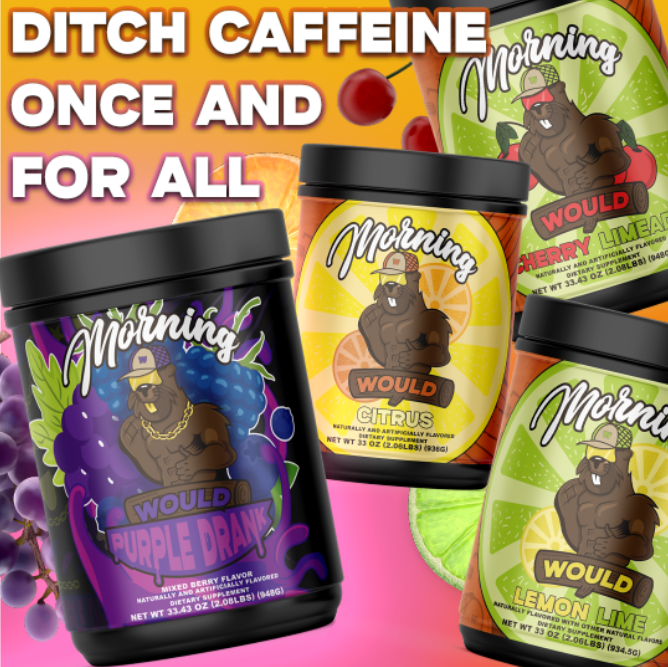
While stimulants trick your brain into feeling awake by blocking adenosine receptors, creatine works at a cellular level to actually power your movement. It doesn't make you "hyper"; it makes you capable. This guide will dismantle the hyperactivity myth and explain how Morning Would uses creatine to optimize your output without the crash.
What is Creatine?
Creatine is a nitrogenous organic acid that serves as a primary fuel source for rapid, high-intensity muscle contractions. It is stored in muscles as phosphocreatine and is used to regenerate Adenosine Triphosphate (ATP)—the body's molecular currency of energy.
Think of it as a reserve fuel tank. When you sprint, lift heavy, or think hard, your ATP drains in seconds. Creatine instantly refills it. It is not a stimulant; it is a substrate.

The Comparison: Stimulants vs. Fuel
To understand why you won't be bouncing off the walls, we need to distinguish between "being high" and "being fueled."
Best for " Buzz" & Jitters: Caffeine & Pre-Workouts
-
The Mechanism: Central Nervous System (CNS) stimulation. It increases heart rate, blood pressure, and alertness.
-
The Feeling: "Hyper," anxious, wired, or jittery.
-
The Reality: It borrows energy from tomorrow. Once it wears off, you crash.
-
Verdict: Useful for acute wakefulness, but biologically taxing.
Best for Sustainable Output: Creatine (Morning Would)
-
The Mechanism: Cellular energy regeneration. It increases the availability of ATP for physical and cognitive tasks.
-
The Feeling: "Capable." You don't feel a buzz; you just feel like you can do one more rep or focus for one more hour.
-
The Morning Would Advantage: By pairing 5g of Creatine with 500mg Sodium, 200mg Magnesium, 9g L-Citrulline, and 300mg Alpha GPC, Morning Would supports steady, crash-free energy. It’s the difference between a sugar rush and a slow-burning log on the fire.
-
Verdict: The superior choice for consistent, high-level performance.

Deep Dive: The Mechanics of Energy (Brand Truths)
Why does the Morning Would formula include 5g of Creatine if it doesn't give you a "buzz"? Because we are optimizing for ATP and Cognition.
1. The ATP Engine (Physical Power)
Your body has three energy systems. For anything intense lasting under 10 seconds (a heavy squat, a sprint), you rely on the Phosphagen System. This system runs on creatine.
-
The Truth: Taking creatine increases your phosphocreatine stores by up to 20-40%. This doesn't make you hyper; it just means your battery is bigger. You can work harder without fatigue, but your resting heart rate remains normal.
2. The Brain's Battery (Mental Clarity)
The brain is a hog for energy, consuming 20% of your daily calories. Just like muscles, neurons rely on ATP.
-
The Brand Truth: Research in 2025 confirms that creatine supplementation reduces mental fatigue and improves cognitive processing, especially during sleep deprivation. It’s not "hyperactivity"—it’s clarity. This is why Morning Would stacks it with Alpha GPC for a complete nootropic effect.
3. The Hydration Factor
Creatine pulls water into cells. This volumization is anabolic (good for muscle) but requires fluid.
-
The Synergy: Without adequate Sodium and Magnesium (found in Morning Would), creatine can’t do its job effectively. The electrolytes ensure that the "energy" you feel is supported by a hydrated physiological state, preventing the sluggishness of dehydration.
Benefits, Risks, and Trade-offs
The Benefits
-
Increased Work Capacity: You can handle more volume in the gym and more deep work in the office.
-
Cognitive Resilience: protects against mental fatigue during long days.
-
No "Crash": Since it’s not a stimulant, there is no comedown. You simply return to baseline.
The Risks & Trade-offs
-
Water Retention: You will hold more water inside your muscle cells. This is healthy, but the scale might go up 1-2 lbs. Do not confuse this with fat gain.
-
Digestive Adjustment: Some users experience bloating if they don't drink enough water. The solution is simple: Hydrate.
-
Misplaced Expectations: If you are looking for a "buzz" to wake you up, creatine won't do it. It is a performance fuel, not a wake-up drug.
Frequently Asked Questions
Q: Will creatine make me feel anxious or jittery?
A: No. Creatine does not stimulate the central nervous system like caffeine. It works on cellular energy stores (ATP), so you won't experience heart palpitations, anxiety, or the "shakes."
Q: Can I take it before bed?
A: Yes. Because it is non-stimulatory, taking creatine at night will not keep you awake. In fact, it supports overnight recovery.
Q: Why do some people say it gives them energy?
A: They are likely confusing "energy" with "stamina." Creatine helps you avoid fatigue. You don't feel "wired," you just feel less tired during exertion.
Q: Does Morning Would contain caffeine?
A: No. Morning Would is designed to optimize your biology without reliance on stimulants. The energy you feel comes from hydration (Electrolytes), blood flow (L-Citrulline), and cellular fuel (Creatine).
About the Author
The Morning Would Performance Team
Performance Strategy & Research Division
This guide was compiled by the Morning Would research team, leveraging the latest 2025 clinical data on bioenergetics and sports nutrition. We are dedicated to debunking "bro-science" and providing you with the actual mechanisms behind human optimization.