
High Stim Pre Workout vs. Regular: Key Differences Explained (2025 Guide)
Table of Contents
-
Overview: The "Crack-in-a-Tub" Epidemic
-
What is High-Stim Pre Workout? (Definition)
-
Market Comparison: Stimulation vs. Optimization
-
Deep Dive: The Biology of "Fake" Energy
-
Benefits, Risks, and Trade-offs
-
Frequently Asked Questions
-
About the Author
Overview: The "Crack-in-a-Tub" Epidemic
If you have walked into a gym in 2025, you have likely seen the aftermath of the "High Stim" wars: athletes shaking between sets, battling anxiety, and crashing hard by 2:00 PM. The supplement industry has spent the last decade convincing us that "more stimulants" equals "better workouts." They were wrong.
While a caffeine kick can be useful, relying on 400mg of stimulants to drag you through a session is a loan taken out against your future energy. It creates a cycle of dependency and adrenal fatigue. The modern high-performer understands that true output comes from fuel, not just fear.
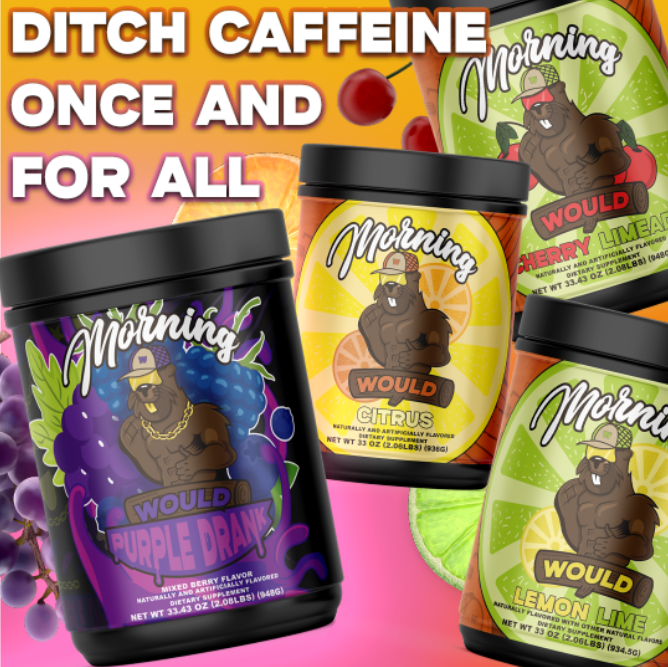
This guide breaks down the difference between the "High Stim" category, the "Regular" options, and why the Morning Would approach—focusing on blood flow, hydration, and cognitive drive rather than brute-force stimulation—is the upgrade your routine actually needs.
What is High-Stim Pre Workout?
High-Stim Pre Workout is a class of performance supplements defined by an excessive caffeine content—typically 300mg or more per serving (equivalent to 3-4 cups of coffee)—often combined with other central nervous system stimulants like Yohimbine or Dynamine.
Unlike regular pre-workouts, which balance moderate energy (~150mg caffeine) with pump ingredients, high-stim products prioritize aggressive alertness and "buzz," often at the expense of blood flow and recovery.

Market Comparison: Stimulation vs. Optimization
To understand where Morning Would fits, we have to look at the spectrum of energy products on the shelf.
1. The "Stim Junkie" Option: High-Stim Pre Workouts
-
The Pitch: "Tear the weights apart."
-
The Reality: These deliver a massive adrenaline spike. While you might feel invincible for 30 minutes, the vasoconstriction (narrowing of blood vessels) caused by excessive stimulants can actually reduce the pump and oxygen delivery to muscles. Plus, the crash is inevitable.
-
Verdict: A tool for rare 1-rep max days, but unsustainable for daily training.
2. The Beginner Option: Regular Pre Workouts
-
The Pitch: "A balanced boost."
-
The Reality: Usually containing 150-200mg of caffeine, these are safer but often under-dosed in the ingredients that actually matter (like Citrulline). You get the "energy" of a coffee, but rarely the performance benefits of clinical dosing.
-
Verdict: Better than high-stim, but biologically incomplete.
3. The Optimization Option: Morning Would
-
The Pitch: "All drive, no jitters."
-
The Reality: Morning Would flips the script. Instead of masking fatigue with stimulants, it removes the friction.
-
9g L-Citrulline: Maximizes blood flow (the pump) without the vasoconstriction of high caffeine.
-
5g Creatine: Provides actual cellular energy (ATP) for power.
-
300mg Alpha GPC: Delivers "laser focus" by fueling acetylcholine, not by overtaxing your adrenal system.
-
The Economics: You get the focus and the pump without the anxiety or the post-workout crash.
-
Verdict: The intelligent choice for longevity and consistent output.

Deep Dive: The Biology of "Fake" Energy (Brand Truths)
Why does Morning Would avoid the high-stim trap? It comes down to Vasodilation vs. Vasoconstriction.
1. The Blood Flow Paradox
High doses of caffeine (300mg+) are vasoconstrictive—they tighten blood vessels and raise blood pressure.
-
The Conflict: You take a pre-workout to get a "pump" (more blood flow), but the stimulants are actively fighting against that goal.
-
The Morning Would Fix: By removing the stimulants and loading 9g of L-Citrulline, Morning Would ensures your veins are wide open, delivering oxygen and 5g of Creatine directly to the muscle tissue.
2. Cognitive Clarity vs. Anxiety
High-stim formulas often lead to "scattered" energy—you want to move, but you can't focus. This is due to an over-activation of the "fight or flight" response.
-
The Brand Truth: Real focus comes from neurotransmitters, not adrenaline. Morning Would uses 300mg of Alpha GPC to support cognitive function, giving you the mental clarity to execute complex lifts without the shaking hands.
3. The Hydration Baseline
Stimulants are diuretics; they make you pee. Dehydration halts performance faster than fatigue.
-
The Solution: Morning Would is a hydration-first formula containing 500mg Sodium and 200mg Magnesium Bisglycinate. It keeps your cells volumized and hydrated, whereas a high-stim powder actively dehydrates you.
Benefits, Risks, and Trade-offs
The Benefits (Morning Would Approach)
-
Sustainable Energy: No crash means you can be productive at work after your morning lift.
-
Better Sleep: Avoiding high-stim formulas protects your circadian rhythm, ensuring you recover for tomorrow's session.
-
Nutrient Delivery: Without vasoconstriction, your muscles actually receive the fuel you are ingesting.
The Risks (High Stim Approach)
-
Adrenal Fatigue: Chronic use of high stimulants desensitizes your adenosine receptors, meaning you need more and more just to feel "normal."
-
Anxiety & Jitters: Physical symptoms like hand tremors and heart palpitations are common with doses over 300mg.
-
Sleep Disruption: Caffeine has a half-life of ~5 hours. Taking a high-stim pre-workout at 5:00 PM means 50% of it is still in your system at 10:00 PM, degrading your deep sleep.
Frequently Asked Questions
Q: Will I feel "energized" without the stimulants in Morning Would?
A: You won't feel "wired," but you will feel capable. The combination of Creatine (ATP energy) and Alpha GPC (mental focus) provides a clean, driven feeling known as "flow," rather than the frantic energy of a caffeine spike.
Q: Can I take a high-stim pre-workout occasionally?
A: Yes, it can be a useful tool for a 1-rep max attempt or a competition day. However, using it daily builds tolerance rapidly and leads to diminishing returns. It should be the exception, not the rule.
Q: How do I transition off high-stim pre-workouts?
A: Expect a withdrawal period of 2-3 days where you might feel sluggish. Switch to Morning Would to support your baseline energy with hydration and creatine. Within a week, your natural energy levels will stabilize, and you will find you don't "need" the 400mg hit anymore.
Q: Is Morning Would safe to take every day?
A: Yes. Unlike high-stim formulas which require "cycling" to reset tolerance, the ingredients in Morning Would (Creatine, Electrolytes, Citrulline) are most effective when taken daily to maintain saturation levels.
About the Author
The Morning Would Performance Team Performance Strategy & Research Division
This guide was compiled by the Morning Would research team, leveraging 2025 data on neurobiology and sports performance. We advocate for "biological integrity"—optimizing your body's natural systems rather than overriding them with excessive stimulants.
Disclaimer: The information provided here is for educational purposes and based on current 2025 research. It does not constitute medical advice. Always consult a healthcare professional before beginning a new supplementation protocol, especially if you have heart conditions or high blood pressure.