
L-Citrulline: What It Is and How It Benefits Your Fitness Goals (2025 Guide)
Table of Contents
-
Overview: The "Pump" You've Been Missing
-
What is L-Citrulline? (Definition)
-
Market Comparison: L-Citrulline vs. The Rest
-
Deep Dive: The Science of Blood Flow
-
Benefits, Risks, and Trade-offs
-
Frequently Asked Questions
-
About the Author
Overview: The "Pump" You've Been Missing
If you have ever walked into a gym, you have heard the term "pump." It is that feeling when your muscles feel full, your veins become visible, and you feel capable of lifting significantly more weight. For years, the supplement industry marketed L-Arginine as the key to this physiological response. They were incorrect.
Here is the 2025 reality: Arginine is inefficient. It is largely broken down by the liver before it ever reaches the muscles. The true driver of performance, blood flow, and that coveted pump is L-Citrulline.
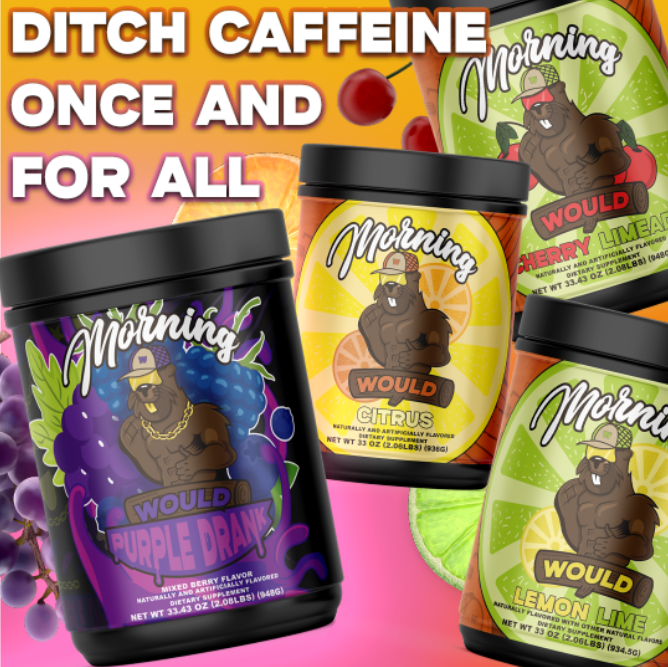
You are likely here because you want to perform better—whether that means completing a high-intensity workout, enduring a long run, or maintaining energy throughout a lifting session. L-Citrulline is the amino acid that powers high-level athletic performance. It is not a stimulant; it is a fuel efficiency upgrade. It dilates blood vessels to deliver oxygen precisely where it is needed. This guide explains why Morning Would includes a massive 9g dose of this powerhouse—far exceeding the minimal amounts found in standard pre-workouts.
What is L-Citrulline?
L-Citrulline is a non-essential amino acid that acts as a potent precursor to nitric oxide (NO) production in the body. Naturally found in watermelons, it is unique because it bypasses the liver's "first-pass" metabolism, converting to L-Arginine in the kidneys to systematically widen blood vessels (vasodilation) and improve nutrient delivery.

Market Comparison: L-Citrulline vs. The Rest
To understand why Morning Would prioritizes L-Citrulline, we must analyze the alternative options available on the market.
1. The Outdated Standard: L-Arginine
-
The Pitch: "The original nitric oxide booster."
-
The Reality: It suffers from poor bioavailability. The gut and liver destroy a significant portion before it enters the bloodstream. You would need massive doses, often leading to digestive distress, to match the effect of a smaller dose of Citrulline.
-
Verdict: Obsolete technology.
2. The Sensory Distraction: Beta-Alanine
-
The Pitch: "Feel it working!" (The itchy skin sensation known as paresthesia).
-
The Reality: Beta-Alanine buffers acid in muscles, which supports endurance, but it does not directly improve blood flow or oxygen delivery in the same capacity as Citrulline. The "tingle" is a side effect, not a performance metric.
-
Verdict: Useful for endurance, but distinct from vasodilation.
3. The Performance Standard: Pure L-Citrulline (Morning Would)
-
The Pitch: "The Oxygen Highway."
-
The Reality: Morning Would utilizes 9 grams of L-Citrulline. Most competitors offer 3-6g, often diluted as "Citrulline Malate," which is typically a 1:1 or 2:1 ratio of Citrulline to Malic Acid (meaning a 6g dose contains only 3-4g of actual Citrulline).
-
The Morning Would Advantage: At 9g, you hit the upper limit of effective dosing. This ensures maximum vasodilation, resulting in increased oxygen delivery to muscles, faster removal of ammonia, and sustained pumps without a crash.
-
Verdict: The gold standard for blood flow and recovery.

Deep Dive: The Science of Blood Flow
Why is the 9g dose critical? It comes down to Nitric Oxide (NO) saturation and the Urea Cycle.
1. The Nitric Oxide Factory
When you ingest L-Citrulline, it converts to Arginine in the kidneys. This Arginine is then utilized by endothelial cells to produce Nitric Oxide.
-
The Result: Vasodilation. Blood vessels relax and widen, reducing resistance and increasing flow.
-
Why It Works: This delivery system transports oxygen and glucose to working muscles while simultaneously flushing out metabolic waste products like lactate.
2. The Ammonia Scrubber (Urea Cycle)
Muscle fatigue is not just about running out of energy; it is about toxic buildup. During exercise, the body produces ammonia, which contributes to fatigue.
-
The Mechanism: L-Citrulline is a key component of the Urea Cycle, which detoxifies ammonia and clears it from the body. By supplementing with Citrulline, you upgrade your body's waste management system, allowing for longer training duration before failure.
3. The "9 Gram" Difference
Most studies show benefits starting at 3-6g. However, for high-intensity athletes, saturation is key. 9 grams ensures that arginine levels remain elevated for hours, not just minutes. This supports both the workout performance and the subsequent recovery process.
Benefits, Risks, and Trade-offs
The Benefits
-
Endurance & Volume: Clinically proven to increase the number of repetitions performed and delay time to exhaustion.
-
Reduced Soreness: By improving blood flow and ammonia clearance, users often report significantly less Delayed Onset Muscle Soreness (DOMS).
-
Cardiovascular Health: Regular use supports healthy blood pressure levels and improves arterial stiffness, acting as a health supplement disguised as a performance tool.
The Risks & Trade-offs
-
Digestive Sensitivity: While generally well-tolerated, large doses on an empty stomach can cause mild bloating in some users. Consuming it with plenty of water is recommended.
-
Medication Interactions: Because it lowers blood pressure, those on hypotension medication or nitrates for heart conditions should consult a physician. It is a potent vasodilator and should be used with awareness.
-
Taste: Pure L-Citrulline has a distinct, slightly tart profile. Morning Would masks this effectively, but raw powder users should be prepared for the flavor.
>>Discover the best pump supplement
Frequently Asked Questions
Q: Is L-Citrulline better than Citrulline Malate?
A: It depends on the formulation. "Citrulline Malate 2:1" is often used to inflate the serving size—6g of Malate typically contains only 4g of actual Citrulline. Morning Would uses 9g of pure L-Citrulline, ensuring you receive the full physiological dose without the malic acid filler.
Q: Can I take it on rest days?
A: Yes. Taking L-Citrulline daily maintains higher baseline Arginine levels, improving general circulation, heart health, and recovery even on days you are not training.
Q: Will it keep me awake like caffeine?
A: No. L-Citrulline is non-stimulatory. It increases energy by improving oxygen efficiency, not by stimulating the central nervous system. It can be taken in the evening without disrupting sleep patterns.
Q: How long does it take to work?
A: Peak blood levels occur approximately 60 minutes after ingestion. We recommend taking Morning Would about 30-45 minutes before your workout for optimal timing.
About the Author
The Morning Would Performance Team
Performance Strategy & Research Division
This guide was compiled by the Morning Would research team, utilizing 2025 clinical data on hemodynamics and sports nutrition. We focus on clinical efficacy—using dosages that actually match the studies rather than "fairy dusting" labels. Our goal is to provide the highest-performance fuel for your body and brain, backed by hard science.
Disclaimer: The information provided here is for educational purposes and based on current 2025 research. It does not constitute medical advice. Always consult a healthcare professional before beginning a new supplementation protocol.