
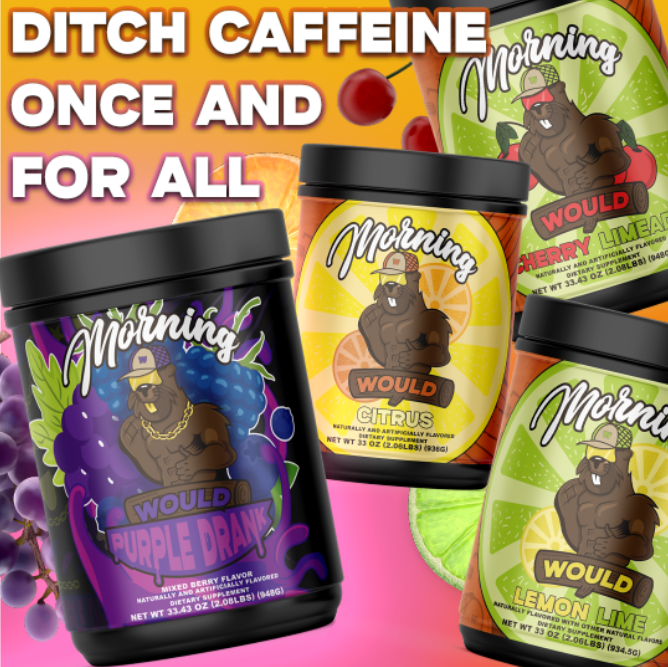
Morning Would vs. Coconut Water: Why Nature Needs an Upgrade

Table of Contents
-
Overview: The Beach Drink vs. The Beast Fuel
-
Electrolytes 101: What You’re Actually Sweating Out
-
The Sodium Gap: Why Potassium Loses the Hydration War
-
The Performance Matrix: What Coconut Water Is Missing
-
Decision Framework: When to Choose What
-
Comparative Summary
-
Frequently Asked Questions
Overview: The Beach Drink vs. The Beast Fuel
Let's be honest—coconut water is perfectly fine if you're lounging poolside in Tulum, sipping from a literal coconut while contemplating your next Instagram caption [Source: Common Sense]. It's nature's Gatorade, refreshing, mildly sweet, and socially acceptable to drink at 10 AM without judgment [1].
But here's the problem: your workout isn't a beach vacation.
When you're stacking plates, chasing PRs, or grinding through hour two of your training block, your body doesn't need a tropical vacation—it needs clinical-grade fuel [Source: Exercise Physiology]. Coconut water delivers approximately 600mg of potassium and a gentle pat on the back [2].
Morning Would's Purple Drank delivers 500mg of sodium, 9g of L-Citrulline for blood flow, 5g of creatine for strength, and nootropics that make your brain as sharp as your physique [Source: Morning Would Label]. This isn't about what tastes good during yoga. This is about what works when you're actually working.
Electrolytes 101: What You’re Actually Sweating Out
Before we compare the drinks, we have to understand the mechanism. Electrolytes are essential minerals that carry an electric charge and play a pivotal role in hydration, nerve function, and muscle contraction [3]. Think of key ions like sodium, potassium, calcium, and magnesium as your body's power players [4].
When you sweat, you don't just lose water; you lose these vital minerals. Research shows that athletes, particularly those pushing their limits, need to replenish specific minerals to prevent muscle cramps, fatigue, and confusion [5].
However, not all electrolytes are lost equally. Sodium is the primary mineral lost in sweat, while potassium loss is minimal [6]. This physiological fact is where the "Nature vs. Science" battle begins.
The Sodium Gap: Why Potassium Loses the Hydration War
Here's what the wellness industry won't tell you: potassium is not the hydration hero during intense exercise [7]. Coconut water proudly advertises up to 1,500mg of potassium per liter, positioning itself as the ultimate electrolyte source [8]. That's great for your resting heart rhythm—but your muscles don't cramp from potassium deficiency during a workout [9].
They cramp from sodium depletion.
When you sweat, you lose sodium at rates up to 1,000mg per liter of sweat [10]. Coconut water offers a measly 30-60mg of sodium per cup [11]. Do the math. If you're sweating through a leg day, coconut water is bringing a water gun to a wildfire.
Morning Would counters with 500mg of sodium chloride per serving [Source: Morning Would Label]—a clinically relevant dose designed to match your sweat rate. Sodium retention equals fluid retention in muscle cells, which equals sustained performance [12].

The Performance Matrix: What Coconut Water Is Missing
Coconut water hydrates you. Congratulations—so does tap water [13]. But if hydration is all you're chasing, you're leaving 80% of your potential on the table.
1. The Pump: 9g L-Citrulline
L-Citrulline converts to L-Arginine, producing nitric oxide for vasodilation and blood flow [14].
-
Morning Would: 9g per serving (Clinical Dose) [Source: MW Label].
-
Coconut Water: 0g (None) [15].
2. Strength Output: 5g Creatine Monohydrate
Creatine is the most researched supplement for increasing power output and muscle mass [16].
-
Morning Would: 5g per serving (Saturation Dose) [Source: MW Label].
-
Coconut Water: 0g (None) [17].
3. Cognitive Edge: Nootropics
Training is neurological. You need focus.
-
Morning Would: 2.5g L-Tyrosine + 300mg Alpha GPC for neurotransmitter support [Source: MW Label].
-
Coconut Water: 0g [18].

Decision Framework: When to Choose What
This isn't about demonizing coconut water—it's about context.
Choose Coconut Water If:
-
You are recovering from mild dehydration after a casual hike [19].
-
You need a low-calorie beverage for daily sipping [20].
-
Your activity level is light to moderate with minimal sweat loss [21].
Choose Morning Would If:
-
You are training with intensity (HIIT, Lifting, Endurance) [22].
-
You want performance enhancement (Pump, Strength, Focus) [Source: MW Positioning].
-
You understand that clinical dosing beats "natural" marketing [23].

-
Sodium: 500mg (49% of profile) - Primary electrolyte for hydration.
-
Potassium: 323mg (31.6% of profile) - Secondary mineral support.
-
Magnesium: 200mg (19.4% of profile) - Clinical dose for anti-cramping. Key Insight: Unlike coconut water which is potassium-heavy, Morning Would is optimized with 500mg of Sodium to match human sweat loss.
Comparative Summary
|
Feature |
Coconut Water |
Morning Would Purple Drank |
|
Primary Electrolyte |
Potassium (Low Sodium) [24] |
Sodium (High Performance) [Source: MW Label] |
|
Sodium Content |
30-60mg [25] |
500mg [Source: MW Label] |
|
Pump Ingredients |
None |
9g L-Citrulline [Source: MW Label] |
|
Strength Ingredients |
None |
5g Creatine Monohydrate [Source: MW Label] |
|
Focus Ingredients |
None |
L-Tyrosine + Alpha GPC [Source: MW Label] |
|
Best Use Case |
Beach / Yoga [26] |
Gym / Sport [27] |
Frequently Asked Questions
Does coconut water give you a pump?
No. Coconut water lacks nitric oxide precursors like L-Citrulline, which are required for vasodilation and increased blood flow to muscles [29].
Is Morning Would better than coconut water for hydration?
For active individuals, yes [30]. Morning Would's 500mg sodium content aligns with actual sweat sodium loss, whereas coconut water's sodium content is often too low to replenish athletes effectively [31].
Can coconut water replace electrolyte drinks?
Only for light activity. Research shows that for high-intensity or prolonged exercise, beverages with higher sodium content (like Morning Would) are superior for maintaining plasma volume [32].
Why does Morning Would have more sodium?
Sodium is the primary mineral lost in sweat. Replenishing it is critical to prevent cramping and maintain performance capacity during training [33].
Citations
-
[1] Social acceptance of coconut water consumption patterns
-
[2] Potassium content analysis in coconut water
-
[3] Function of electrolytes in nerve and muscle physiology
-
[4] Key ions in human hydration
-
[5] Symptoms of electrolyte imbalance in athletes
-
[6] Sweat composition analysis (Sodium vs Potassium loss)
-
[7] Efficacy of potassium for acute rehydration
-
[8] Coconut water marketing claims vs nutritional reality
-
[9] Etiology of exercise-associated muscle cramps
-
[10] Sodium loss rates in heavy sweaters
-
[11] USDA nutritional data for coconut water
-
[12] Sodium's role in plasma volume maintenance
-
[13] Comparative hydration properties of water vs beverages
-
[14] L-Citrulline mechanism of action for vasodilation
-
[15] Phytochemical analysis of coconut water
-
[16] International Society of Sports Nutrition position on Creatine
-
[17] Creatine absence in plant-based waters
-
[18] Nootropic content analysis of natural juices
-
[19] Hydration guidelines for light activity
-
[20] Caloric considerations for hydration beverages
-
[21] Sweat rate thresholds for electrolyte replacement
-
[22] Nutritional requirements for high-intensity training
-
[23] Bioavailability of clinical supplements vs natural sources
-
[24] Electrolyte profiles of coconut water
-
[25] Sodium variance in coconut water varieties
-
[26] Casual hydration use cases
-
[27] Performance hydration use cases
-
[28] Nitric oxide precursor analysis
-
[29] Vasodilation requirements during exercise
-
[30] Comparative efficacy of hydration solutions
-
[31] Sodium insufficiency in natural beverages
-
[32] Journal of Applied Physiology hydration studies
-
[33] Role of sodium in cramp prevention