
The Best Electrolyte Powder of 2025: A Smart Guide to Hydration

Status Quo: You are standing in the supplement aisle (or scrolling Amazon), staring at a wall of neon bottles and fizzy tablets, wondering which one actually works. The Reality: Most of what you see is either sugar water or under-dosed salt. We analyzed the landscape—from legacy sports drinks to natural fads—to help you find the best electrolyte powder for actual performance.
Table of Contents
- Overview: The Hydration Confusion
- Definition: What Are Electrolyte Drinks?
- Market Comparison: Casual vs. Performance
- Deep Dive: The Science of Optimization
- Risk vs. Reward: What to Avoid
- FAQ: Common Questions
Overview: The Hydration Confusion
If you’ve ever felt dizzy during a heavy lift or sluggish on a hot run, you’ve felt the crash. The standard advice is to grab a "sports drink" or some coconut water to fix it.
But here is the problem: The market is noisy. In 2025, you have options ranging from "natural" single-ingredients to complex chemical blends. Most people grab whatever is colorful, not realizing that before workout supplements need specific clinical dosages to actually impact your physiology. If you want to move beyond just "quenching thirst" and actually enhance your output, you need to understand what you are putting in your body.
Definition: What Are Electrolyte Drinks?
Let’s start with the basics to get everyone on the same page.
What is an electrolyte drink? An electrolyte drink is a beverage or dissolved powder containing essential minerals—specifically sodium, potassium, magnesium, and calcium—designed to maintain the body’s fluid balance, nerve function, and muscle contractions.

Market Comparison: Casual vs. Performance
The hydration market falls into distinct buckets. Let’s break them down by use-case to see which electrolyte powder or drink actually fits your needs.
1. Best for "Quick Energy" (But High Risk): Sports Drinks
-
The Contenders: Legacy brands like Gatorade and Powerade.
-
The Logic: These combine carbohydrates with minerals for rapid replenishment.
-
The Morning Would Verdict: Useful if you are running a marathon in 1995. Today, we know that the high sugar content ("The Neon Sugar Trap") often outweighs the hydration benefits, leading to insulin spikes rather than sustained energy.
2. Best for Casual Refreshment: Coconut Water
-
The Contenders: Various natural brands.
-
The Logic: It has surged in popularity in 2025 due to high potassium and "natural" marketing.
-
The Morning Would Verdict: It’s delicious, but it’s not a serious performance tool. It lacks the high sodium required to significantly expand blood plasma volume during intense training. Great for the beach, bad for the bench press.
3. Best for Convenience: Mineral Tablets
-
The Contenders: Brands like Nuun.
-
The Logic: Fizzy tablets that dissolve in water for a "quick mineral boost" on the go.
-
The Morning Would Verdict: High convenience, low potency. Good for travel, but rarely dosed high enough for a serious athlete.
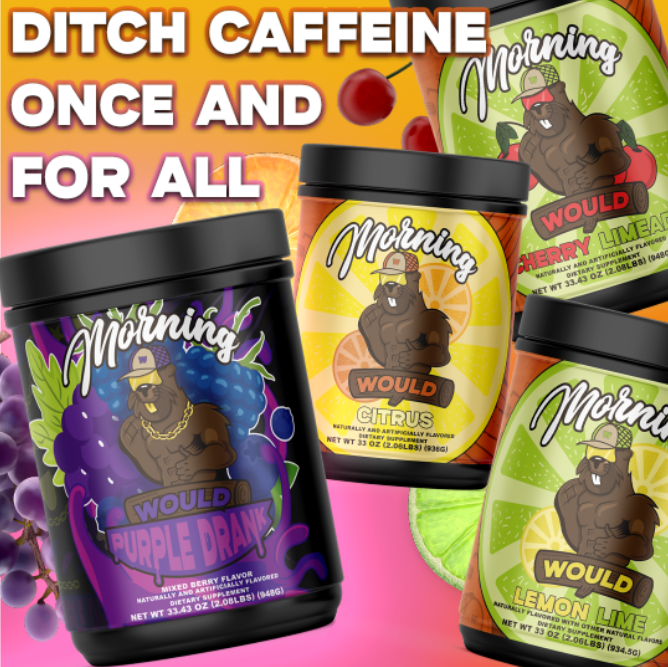
4. Best for Performance: The Morning Would Protocol
-
The Logic: We stripped away the sugar and synthetic dyes and focused on the benefits of electrolytes combined with neural drivers.
-
The Upgrade: Unlike the options above, we use 500mg of Sodium for plasma expansion and 200mg of Magnesium Bisglycinate (the kind your body actually absorbs). We didn't stop at hydration; we added 5g of Creatine, 300mg of Alpha GPC, and 9g of L-Citrulline to ensure your brain and blood flow are working as hard as your muscles.

Deep Dive: The Science of Optimization
Standard physiology textbooks note that minerals support "muscle function" and "recovery". But let's pivot to how we actually achieve that. It’s not magic; it’s biology.
Most products focus on Replenishment (replacing what you lost). We focus on Pre-Loading.
-
Fluid Volume (The Sodium Factor): Standard drinks are too dilute. By consuming a higher concentration of sodium (like our 500mg dose) before you train, you increase blood plasma volume. This creates a buffer against fatigue before you even start sweating.
-
The Delivery System (L-Citrulline): You can drink all the water you want, but if your veins are constricted, it won't get to the muscle efficiently. We include 9g of L-Citrulline to boost Nitric Oxide. Think of this as opening up the highway so the delivery trucks (electrolytes) can get to the job site faster.
-
The Neural Link (Alpha GPC): Fatigue isn't just muscular; it's mental. The "brain fog" you feel at the end of a workout is a drop in acetylcholine. We supplement with 300mg Alpha GPC to keep the signal from your brain to your muscles strong.
Risk vs. Reward: What to Avoid
When evaluating before workout supplements, you have to look at the label. Every nutrition guide highlights a crucial trade-off: Benefits vs. Risks.
The Benefits:
-
Hydration: Maintaining fluid balance in heat or stress.
-
Performance: Delaying fatigue and reducing cramps.
-
Convenience: Easy-to-mix powders that travel with you.
The Risks (The "Status Quo" Pitfalls):
-
Excessive Sugar: Many commercial sports drinks are essentially soda. This leads to weight gain and metabolic issues.
-
Synthetic Components: Artificial dyes and cheap flavorings that don't align with a clean lifestyle.
-
Cheap Minerals: Using Magnesium Oxide (laxative effect) instead of Magnesium Bisglycinate (absorption).
FAQ: Common Questions
Q: Why are electrolyte drinks important for athletes?
A: They replenish minerals lost through sweat, which is vital for maintaining peak performance and preventing the "crash" during physical activity.
Q: Can I just drink water?
A: Water quenches thirst, but it doesn't replace the sodium or potassium needed for nerve transmission. Without electrolytes, you risk cramps and fatigue.
Q: When is the best time to take an electrolyte powder?
A: For optimal results, consume it 20-30 minutes before your workout. This pre-loads your system and ensures the minerals are available when the work starts.
Q: What happens if I don't use them?
A: You leave performance on the table. Neglecting hydration leads to reduced endurance, muscle cramping, and slower recovery times.