
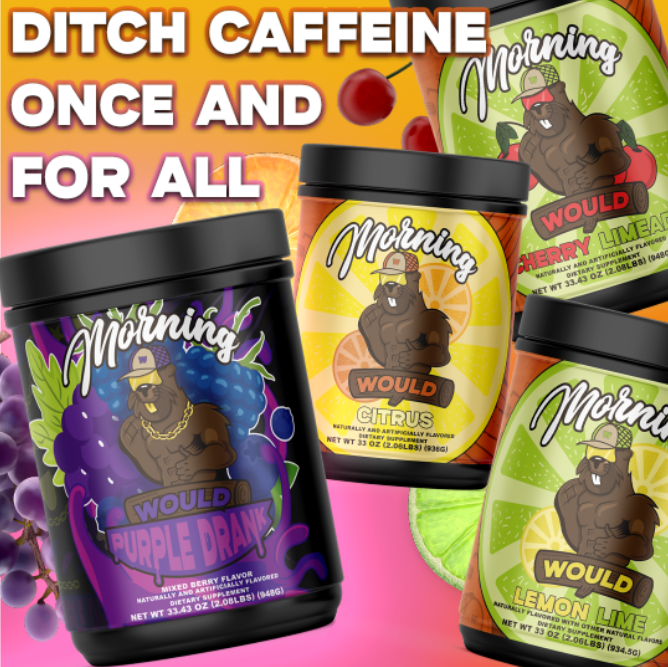
The Science of Morning Would: A Deep Dive Into Clinical Dosages
Table of Contents
-
Overview
-
What is a Clinical Performance Stack?
-
Market Comparison: The Formulation Landscape
-
Deep Dive: The Ingredient Science
-
Benefits vs. Trade-offs
-
Frequently Asked Questions
-
About the Author
Overview
If you walk down the supplement aisle in 2025, you are greeted by a wall of noise. You have "energy" drinks loaded with sugar, magnesium supplements that are chemically identical to concrete laxatives, and pre-workouts that prioritize skin-tingling additives over physiological function.
The problem isn't that supplements don't work; it's that most commercial formulations rely on outdated research or cheap filler ingredients to widen margins.
Morning Would was built to solve the "Bioavailability Gap"—the difference between what you swallow and what your body actually uses. By utilizing high-absorption forms like Magnesium Bisglycinate and massive clinical doses of pure L-Citrulline, we aim to support recovery, cognitive endurance, and blood flow without the jitters or the crash.
What is a Clinical Performance Stack?
A Clinical Performance Stack is a coordinated group of supplemental ingredients dosed according to human efficacy trials rather than marketing hype. Unlike a standard multivitamin, which provides minimum viable doses to prevent deficiency, a performance stack utilizes therapeutic dosages—such as 5g of Creatine, 9g of L-Citrulline, and 300mg of Alpha GPC—specifically chosen to optimize physiological output, including cognitive processing speed, vasodilation, and sleep latency.
Market Comparison: The Formulation Landscape
We know you have options. Here is how the Morning Would specification stacks up against the usual suspects in your cabinet, based on current bioavailability data.
1. The Magnesium Comparison: Generic Drugstore Pills
Most cheap magnesium supplements use Magnesium Oxide. It is cheap to manufacture and packs a lot of elemental magnesium into a small pill.
-
Best for Constipation Relief: Generic Magnesium Oxide. Because it is poorly absorbed, it draws water into the intestines. It’s effective if you are backed up, but suboptimal for muscle recovery.
-
Best for Deep Recovery: Morning Would. We use 200mg of Magnesium Bisglycinate. In this form, the magnesium is bound to glycine, an amino acid. This allows it to bypass standard digestion competition, resulting in higher absorption and a calming effect on the nervous system without the laxative effect.
2. The Nitric Oxide Comparison: Pre-Workout Blends
Many pre-workouts use Citrulline Malate (usually a 2:1 ratio).
-
Best for Sour Taste/Volume: Standard Pre-Workouts. The "Malate" is just malic acid. It adds a tart flavor and bulk to the scoop, but recent data questions if it adds performance value.
-
Best for Pure Efficiency: Morning Would. We use 9g of Pure L-Citrulline. A 2025 study in the Journal of the International Society of Sports Nutrition suggested that the malic acid component might be unnecessary filler. We cut the acid so you get a massive dose of the active ingredient responsible for nitric oxide production and blood flow.
3. The Brain Comparison: Energy Drinks
-
Best for The 2 PM Crash: Caffeine/Sugar Bombs. They work by blocking adenosine receptors, essentially borrowing energy from tomorrow.
Best for Sustained Focus: Morning Would. We utilize 5g of Creatine Monohydrate and 300mg of Alpha GPC. Creatine isn't just for biceps; it acts as a "backup battery" for the brain during high-stress tasks. This supports clarity without the adrenaline spike.

Deep Dive: The Ingredient Science
We don't hide behind "Proprietary Blends." Here is the exact mechanism of action for our core drivers.
Magnesium Bisglycinate (200mg): The "Double-Calm" Agent
Magnesium is involved in over 300 enzymatic reactions, but the form matters. We chose Bisglycinate because it offers a two-for-one benefit.
-
The Mineral: Magnesium regulates NMDA receptors, which helps relax skeletal muscle tension and prevent cramping.
-
The Carrier: Glycine is an inhibitory neurotransmitter. It lowers core body temperature and signals the brain to cool down. The Result: A 2024 randomized controlled trial found that this specific combination reduced insomnia severity more effectively than placebo, specifically in adults with poor sleep quality.
L-Citrulline (9g): The Oxygen Highway
While many brands use Arginine, it has poor bioavailability. L-Citrulline is the precursor to Arginine and is far more effective at increasing plasma Arginine levels than Arginine itself. We use a potent 9g dose—significantly higher than the industry standard of 3-6g.
-
Mechanism: It boosts Nitric Oxide (NO) production, which relaxes blood vessels (vasodilation).
-
Outcome: Improved nutrient delivery and the "pump" sensation. Research consistently shows it increases "reps to failure" in resistance training by improving oxygen efficiency.
Creatine Monohydrate (5g): Cognitive Fuel
Stop thinking of creatine as a bodybuilding supplement. Think of it as a neuro-protectant.
-
The Mechanism: The brain is a metabolically expensive organ. During intense thinking or sleep deprivation, brain phosphocreatine levels drop.
-
The Upgrade: Supplementation saturates these stores, allowing for faster ATP regeneration.
-
Evidence: A systematic review highlights that while creatine helps everyone, its cognitive effects are most profound when you are tired or stressed. It is your safety net against mental fatigue.
Alpha GPC (300mg): The Acetylcholine Spike
Alpha GPC is a cholinergic compound that crosses the blood-brain barrier to rapidly increase acetylcholine—the neurotransmitter responsible for learning and muscle contraction.
-
Performance: Studies indicate acute supplementation can improve reaction time (e.g., Stroop Test performance) and perceived focus. It is the "sharpness" in the stack.

Benefits vs. Trade-offs
We believe in transparency. No supplement is magic, and biology is individual.
The Benefits
-
Sleep Architecture: The Glycine/Magnesium combo supports falling asleep faster and staying asleep.
-
Hemodynamic Function: Improved blood flow leads to better pumps in the gym and potentially better blood pressure regulation at rest.
-
Cognitive Resilience: Better working memory during stressful periods (crunch time at work, exam weeks).
The Risks & Trade-offs
-
Digestive Adjustment: While Bisglycinate is the most gentle form of magnesium, any mineral supplementation can cause minor GI changes in the first 3-5 days as your body adjusts.
-
The TMAO Factor: Long-term, chronic use of Alpha GPC has been linked to elevated TMAO levels in some populations, which is a marker for cardiovascular risk. Our advice: We dose responsibly at 300mg, but we also recommend cycling Alpha GPC (e.g., taking a break every few months) or ensuring your diet is high in fiber to mitigate TMAO conversion.
-
Volume: With 9g of Citrulline and 5g of Creatine, this is a substantial amount of powder. It is not a tiny pill; it is a functional drink.
Frequently Asked Questions
Q: When is the best time to take Morning Would?
A: Despite the name, many users prefer taking the Magnesium/Glycine components in the evening to leverage the sleep benefits. However, the Creatine (5g) and Citrulline (9g) can be taken at any time, as they work by saturation (building up in your system) rather than acute timing.
Q: Will Creatine make me retain water and look bloated?
A: This is a myth from the 90s. Creatine pulls water intracellularly (inside the muscle cell), which creates a hydrated, leaner look. It does not typically cause subcutaneous (under the skin) water retention unless you are taking massive doses well beyond our 5g standard.
Q: Why don't you use Citrulline Malate?
A: Because we respect your wallet and your physiology. New research from 2025 suggests the "Malate" (malic acid) doesn't add significant performance benefits over Pure L-Citrulline. By removing the acid filler, we give you 9g of active ingredient per scoop rather than diluted filler.
Q: Is this safe for daily use?
A: Generally, yes. The ingredients in Morning Would (Magnesium, Creatine, Citrulline) have excellent safety profiles in healthy adults. However, if you have kidney issues or are on heart medication, always talk to your doctor before adding a high-dose Citrulline or Creatine stack to your routine.
About the Author
Toni — Senior Strategy & R&D at Morning Would
Toni is the lead architect behind the Morning Would formulation. With a background in nutritional biochemistry and over a decade of experience analyzing clinical data for high-performance athletes, Toni specializes in bridging the gap between complex academic studies and your daily routine.
Current as of late 2025. This article is for informational purposes only and does not constitute medical advice.